
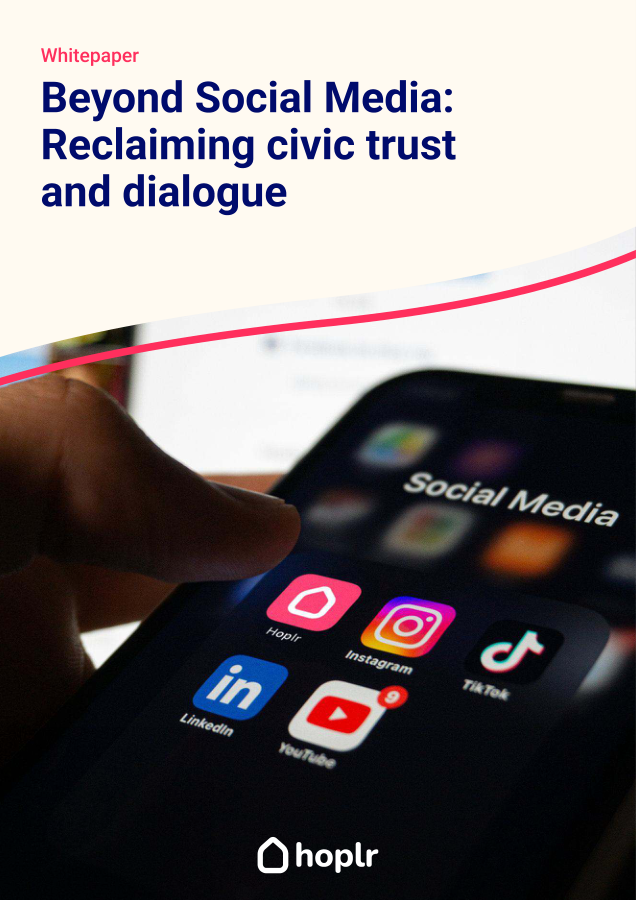
01 · Beyond social media
Is social media the right channel for public communication?
Digital communication is an essential tool for governments to inform citizens and stay connected with them. For years, social media played a key role in this. Platforms like Facebook, Instagram, and X (formerly Twitter) offered municipalities an accessible way to reach residents.
However, concerns are growing about the role of these platforms in public communication. Issues such as privacy, the spread of misinformation, and the influence of commercial algorithms on message visibility are raising important questions. One of the most pressing: Should governments still be active on social media?
But perhaps the better question is: Are social media platforms even the right channels for public communication in the first place? Digital communication isn’t just about broadcasting information—it’s about participation, interaction, and strengthening local communities.
Now is the time for municipalities to explore alternatives. Explore the limitations of social media for public sector communication, the characteristics of a future-proof digital platform, and the alternatives that better meet the needs of local governments and their communities.
02 · The role of municipalities
Communication goes beyond simply informing.
Municipalities play a vital role in the daily lives of their residents. They’re responsible for informing citizens, encouraging participation, and strengthening local communities. This goes far beyond simply sharing information; effective public communication means engaging in an active dialogue between local government and residents—where everyone feels heard and involved.
A strong municipal communication strategy focuses on three core responsibilities:
Reach
Ensure that citizens are informed accurately and on time. Municipalities provide essential information about policies, regulations, and local developments. This includes updates on roadworks, changes to waste collection, safety measures, and available social services.
Engage
Municipal policies impact residents’ daily lives— from infrastructure and sustainability to social services. Public support grows when citizens are not only informed but also actively involved in decision-making. That’s why municipalities are increasingly investing in citizen participation through consultations, surveys, and engagement projects.
Connect
A municipality is more than just an administrative body—it’s the heart of the community. Local governments play a key role in strengthening social cohesion, supporting neighborhood initiatives, and encouraging civic engagement. By facilitating neighborly help, volunteer work, and community projects, they bring people closer together.
“We believe that digital communication is not just a tool for one-way communication, but an opportunity to strengthen communities. Technology should create space for connection, engagement, and local solidarity.”
03 · The limits of social media
Where social media falls short.
For years, social media have supported municipalities in their communication efforts. However, these platforms were never designed with the specific roles and responsibilities of local government in mind. In theory, they may seem like effective tools to reach residents— but in practice, they come with structural limitations that hinder governments in carrying out their core tasks: reaching, engaging, and connecting.
Reach: no certainty about visibility or context
Algorithms decide what people see
On social media, algorithms determine which posts are prioritized—often favoring engagement (likes, comments, shares) over relevance. This means that an important municipal update can easily get lost among ads and viral content. A post about a public consultation meeting or changes to waste collection might go unnoticed by the people who need to see it.
The message can be misunderstood
On social media, the context of a message can easily get lost. For example, when it is shared with personal commentary, or when reactions under a post set the tone. Although it is never possible to fully control how a message is interpreted, social media can shift its meaning even more quickly. What was intended as neutral information can take on a life of its own. This makes it difficult for municipalities to convey their message in a neutral and reliable way.
Misinformation undermines trust
Social media platforms often reward emotionally charged content, meaning sensational or polarizing posts are more likely to gain traction than factual, neutral information. As a result, misinformation spreads faster than official updates from municipalities. Even when fact-checks are provided, they rarely reach the same audience as the original misleading post. This erodes trust in municipal communication and can create confusion among residents.
No guarantee of timely or complete information
Social media was never intended to serve as a primary information channel for governments. Not all residents rely on social platforms as their main source of news, and messages can easily get buried in the content stream. This becomes especially problematic during emergencies, when clear and timely communication is critical.
“As a public authority, you want to be certain that crucial information reaches your residents, without relying on algorithms or commercial interests. At the same time, you need to trust that data is processed and stored securely. That’s why Hoplr is completely free of algorithms and developed in compliance with ISO 27001 and GDPR standards.”
Engage: little structure for meaningful participation
Shallow interaction instead of real engagement
Social media platforms are not designed for in-depth citizen participation. Discussions are often limited to short comments, likes, or poll responses, with little room for meaningful dialogue. The fleeting nature of these platforms makes it difficult to structure public consultation processes or facilitate constructive conversations. Discussions can quickly escalate or go off-topic, leading to polarization and reducing the quality of engagement. As a result, municipalities often miss out on the valuable insights needed to inform effective policy.
Lack of oversight and fragmented input
Because responses are spread across different posts and comment sections, social media provides little structure or clarity for policymakers. Valuable input becomes fragmented and difficult to collect or process. This makes participation feel unstructured and inaccessible, while effective citizen engagement requires clarity and cohesion. When municipalities rely on social media, they risk missing important signals from the community.
“The need for neighborhood connection has never been greater. As a result, there was a growing demand for a suitable channel where our neighborhoods can come together and stay connected. With Hoplr, we are strengthening social cohesion and enabling offline interaction. These forms of engagement are invaluable for creating caring communities.”
“We’ve noticed that municipalities are not just looking for reach, but actually for genuine engagement.”
Connect: no stable foundation for community
Local communities get lost in the noise
Social media is global by design, not local. While local Facebook groups do exist, posts are still subject to algorithms and engagement-driven visibility. Community initiatives often get buried in the content stream. Information about neighborhood projects and local events can be hard to find amid the overwhelming volume of unrelated content.
No exclusive, safe space for neighborhoods and residents
Strong communities need a safe, controlled environment where residents can collaborate and communicate without the influence of commercial interests or unwanted interference. Open platforms like social media do not fully verify created profiles. People can join groups anonymously, disrupting the safety of the community. This can lead to unsafe discussions, unwanted influence, and higher barriers to active participation.
Social cohesion requires a focused approach
True community building calls for a platform where neighbors can find and support one another, where volunteer initiatives have a central place, and where local governments can communicate directly with residents in a private, secure environment.
04 · What to look for in an alternative
A digital channel built for local government.
Rather than looking for a social network that does meet all the requirements, it’s more relevant to explore platforms specifically designed for citizen participation and local connection. Platforms that support not only communication, but also dialogue and collaboration between municipalities and residents. A digital channel that truly aligns with the role of local government in society: a place where information is shared reliably, participation is encouraged, and communities are strengthened.
What should you look for in an alternative?
Closed and neighborhood-focused
Local communication requires a platform that brings residents of a specific municipality or neighborhood together in a safe, private environment. By restricting access to verified residents, communication becomes more direct and relevant. This ensures that government messages don’t get lost in an endless content stream, but actually reach the people it’s intended for—without interference from algorithms or commercial priorities. This not only makes communication more effective, but also increases engagement and trust in the municipality as a source of information.
Privacy and data protection as a priority
Strict compliance with privacy legislation is essential for public institutions. Consider how a platform handles personal data, its compliance with the GDPR and demonstrable information security, for example through ISO 27001 certification. A clear approach to data protection protects residents and helps municipalities communicate within a framework that reflects their public responsibility.
A sustainable and transparent business model
Unlike social media platforms that rely on ad revenue and data monetization, municipalities need a platform with a transparent, ethical revenue model. One where governments pay for access and usage—keeping communication free from commercial influence and algorithmic filtering. This gives local authorities full control over their messaging and interactions, without external companies deciding who sees what.
Tools for active participation
Communication goes beyond just informing; residents should also have the opportunity to actively contribute to policy and decision-making. A suitable platform offers structured participation tools, such as digital consultations, citizen panels, and collaboration modules. This transforms it from a one-way communication channel into an environment where residents and municipalities work together to shape their community.
05 · In practice: Terneuzen
Terneuzen: building stronger neighborhoods together.
More and more municipalities are exploring alternatives — and with success.
“The audience is now much more diverse than before, with not only older men over fifty, but also many young adults and a larger number of women.”
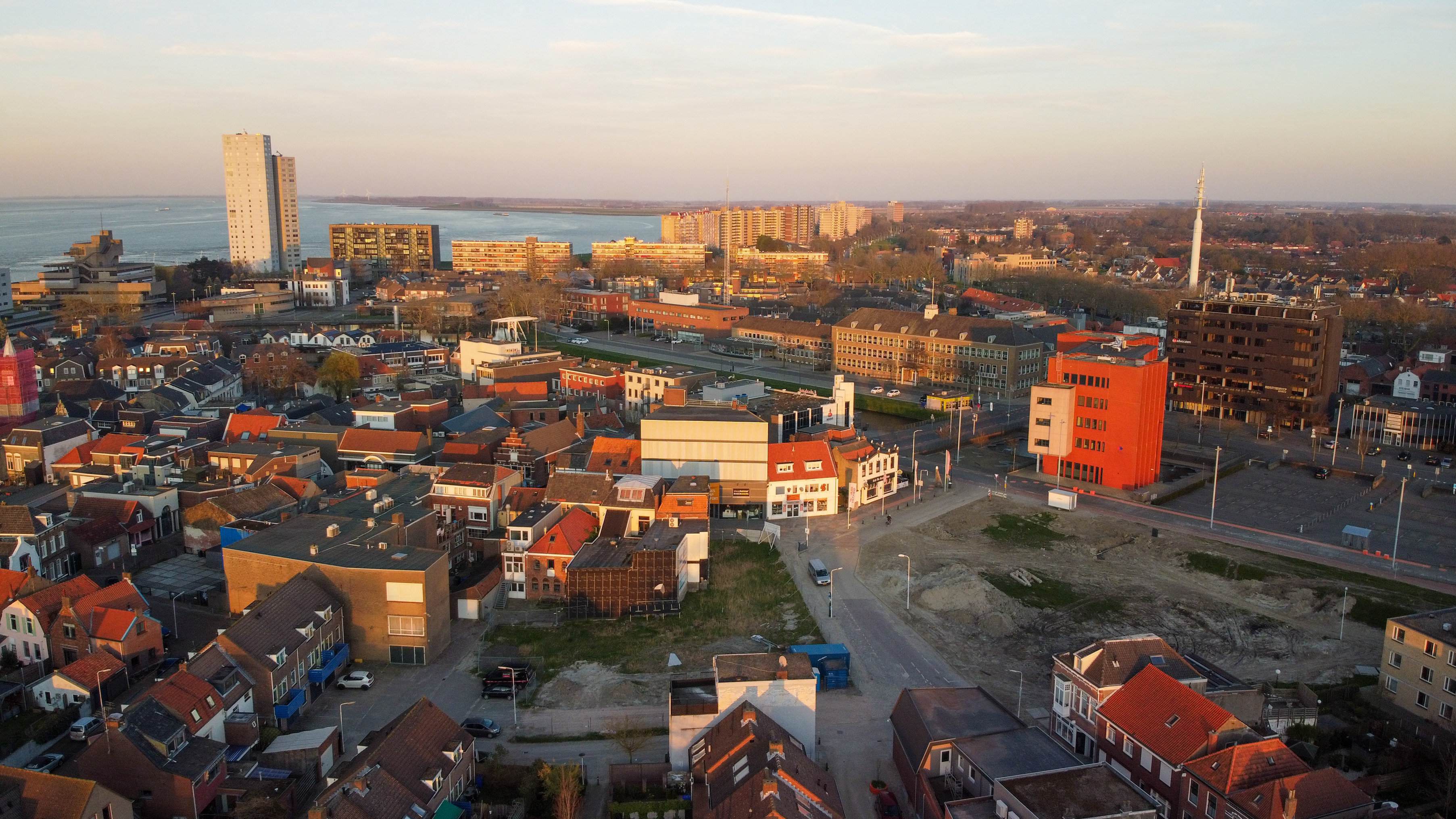
Read more about the Municipality of Terneuzen’s innovative approach to strengthening social cohesion and neighborhood participation.
Read the Terneuzen case study06 · Hoplr as an alternative
From local contact to an engaged community.
Hoplr is a neighborhood-focused platform specifically designed to connect municipalities and local communities. Unlike traditional social media, Hoplr enables safe, private, and ad-free communication—allowing governments to reach residents directly and effectively.
With a strong emphasis on participation and community building, Hoplr offers an environment where residents are not only informed but also actively involved in their neighborhood. Through structured interaction and support for local initiatives, Hoplr helps governments engage more closely with citizens and work together toward a stronger, more connected community.
The benefits of Hoplr
- A safe, privacy-friendly environment with no commercial advertisement.
- Targeted communication with residents, free from algorithmic interference.
- Active participation features, such as consultations, neighborhood initiatives, and decision-making tools.
- A locally rooted solution that empowers neighbors to support one another and enables governments to better respond to what’s happening in the community.
07 · Sources & further reading
Explore further.
The following references are included in the original whitepaper.
- The Guardian — Meta’s 2023 data protection fine
- NPR — Meta ends independent fact-checking in the US
- The Guardian — Facebook blocks news in Australia
- Forbes — EU findings on disinformation on X
- Hoplr — Neighborhood participation in Terneuzen
Web edition of Beyond Social Media (2025). Lightly edited for online readability and consistent terminology. Download the PDF.
What could this mean for your municipality?
Discover how Hoplr brings neighborhood connection, local communication and participation together.
Book a demo